Originally posted 06/15/2020
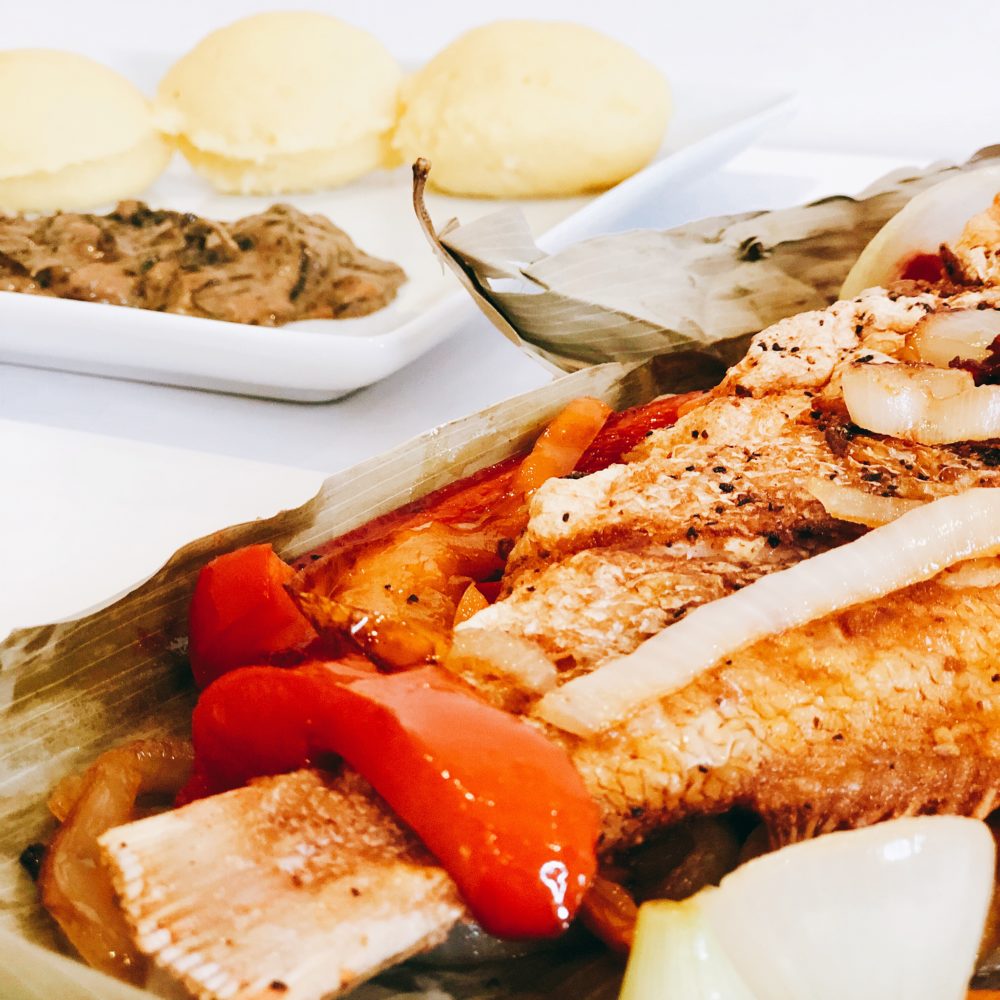
We started the year on a high note in the kitchen with a very special guest—South African actress and media personality Pearl Thusi. Together, we made authentic Congolese fumbwa with fried fish and fufu, a traditional comfort food that brings together rich flavors, culture, and storytelling in one unforgettable dish.
As we cooked together, Pearl shared stories about the dishes she grew up eating in South Africa while learning how to make one of my favorite traditional Congolese meals: fumbwa with fried fish and fufu.
This dish instantly takes me back home. It represents comfort, family gatherings, and the rich culinary traditions of the Democratic Republic of Congo. If you’ve never tried fumbwa before, this recipe is the perfect introduction to one of Central Africa’s most beloved vegetable stews.
Some of the specialty ingredients and kitchen tools I use for this recipe can be difficult to find outside of African grocery stores. I’ve linked many of my favorite African cooking essentials, pantry staples, and kitchen tools in my Amazon storefront for readers who want to recreate authentic African dishes at home.
What Is Fumbwa?
Fumbwa is a traditional Congolese vegetable stew made from wild vine leaves native to Central Africa. The leaves are slowly simmered with aromatics, palm oil, and peanuts to create a rich, earthy, and deeply flavorful dish.
Many people refer to fumbwa as “African spinach,” but the comparison only goes so far. While the texture may be similar to cooked spinach, the flavor is unique and unmistakably Congolese.
Throughout the Democratic Republic of Congo, fumbwa is commonly served with fufu, rice, plantains, smoked fish, or grilled meats. The slow-cooking process allows the ingredients to develop layers of flavor, making it one of the country’s most comforting traditional dishes.
If you enjoy hearty African vegetable dishes, you may also love my Pondu recipe, another classic Congolese favorite made with cassava leaves.
Why Fumbwa Is an Important Part of Congolese Cuisine
Fumbwa is a traditional Congolese stew featuring wild-foraged leaves from the Kongo Central rainforests that are finely sliced and simmered into a, creamy, peanut-based dish. The dish incorporates red palm oil and smoked fish to create a distinct, rich, and earthy flavor profile. Originally a specialty of the BaKongo people, fumbwa has become a staple dish in Kinshasa and a symbol of national cuisine. It is typically prepared with intense care, turning rigid leaves into a delicate, flavorful sauce. Today, it is enjoyed communally and pairs best with dense starches like fufu or kwanga. The dish has also gained popularity within the global Congolese diaspora as a nostalgic, comforting meal.
Growing up in Congo, fumbwa was one of those meals that brought everyone together around the table.
Every family has their own variation. Some recipes contain more peanut butter, while others rely heavily on palm oil. Some households add smoked fish for extra depth, while others keep it completely plant-based.
Despite these differences, the heart of the dish remains the same.
Like many traditional African recipes, fumbwa highlights simple ingredients transformed through patience and technique. It reflects the agricultural traditions of Central Africa and demonstrates how local ingredients have sustained communities for generations.
Organizations such as the Food and Agriculture Organization (FAO) have highlighted the importance of preserving traditional crops and indigenous food systems throughout Africa.
What Does Fumbwa Taste Like?
Fumbwa has a rich and savory flavor profile with earthy notes from the leaves and a creamy texture created by the peanut butter.
The palm oil adds depth and richness, while onions, garlic, tomatoes, and bouillon create layers of umami flavor.
The result is a hearty vegetable stew that feels both nourishing and indulgent.
Because of its richness, fumbwa pairs beautifully with mild starches like fufu, which help absorb the flavorful sauce.
Why Fried Fish Works So Well with Fumbwa
While fumbwa can be served with many proteins, fried fish is one of the most traditional and satisfying pairings.
For this recipe, I used red snapper because it develops a beautifully crisp exterior while remaining flaky and tender inside.
Other excellent fish options include:
- Tilapia
- Sea bass
- Mackerel
- Catfish
- Whole snapper
The crispy texture of the fish contrasts perfectly with the creamy fumbwa.
If you’re looking for more seafood inspiration, check out my collection of African fish recipes.
What Is Fufu?
Fufu is one of Africa’s most widely consumed staple foods and can be found throughout West, Central, and East Africa.
Depending on the region, it can be made from:
- Cassava flour
- Plantains
- Yam flour
- Cornmeal
- Semolina
For this recipe, I make fufu using semolina flour.
Its mild flavor makes it the perfect accompaniment to rich stews like fumbwa because it absorbs sauces without competing with them.
If you’re new to making fufu, be sure to read my complete guide on How to Make Fufu from Scratch.
The Nutritional Benefits of Fumbwa
One reason traditional African cuisines deserve more recognition is their emphasis on nutrient-rich ingredients.
Fumbwa contains leafy greens, aromatics, and peanuts, which contribute important nutrients and healthy fats.
Research from the Harvard T.H. Chan School of Public Health highlights the benefits of nuts and legumes as part of a balanced diet.
While fumbwa is often considered comfort food, it also showcases how traditional African dishes combine flavor and nourishment.
Ingredients You’ll Need
1. For the Fumbwa
- 2 cups fumbwa
- 1 cup green onions
- 2 garlic cloves
- ¼ cup tomato sauce
- 1 large onion
- ½ cup palm oil
- 1 medium tomato
- 1 Maggi cube
- ½ tablespoon salt
- Peanut butter
2. For the Fried Fish
- Fish of your choice
- Salt
- Pepper
- Olive oil
3. For the Fufu
- 1½ cups semolina flour
- 2 cups flour
- Water
How to Make Traditional Congolese Fumbwa
Step 1: Boil the Fumbwa
Place the fumbwa in a saucepan and cover with water.
Boil for approximately 20 minutes.
Drain and return to the pot.
Step 2: Build the Flavor Base
Add:
- Onion
- Garlic
- Tomato sauce
- Fresh tomato
- Green onions
- Maggi cube
- Salt
- Palm oil
Add fresh water and bring everything to a boil.
Cook for 15 minutes while stirring occasionally.
Step 3: Add the Peanut Butter
Stir in the peanut butter.
Reduce the heat to low and simmer for 20 minutes.
This slow simmering process allows the flavors to fully develop and creates the creamy texture that makes fumbwa so special.
How to Fry the Fish
Season the fish with salt and pepper.
Heat olive oil in a frying pan over medium heat.
Cook until golden brown on the outside and flaky inside.
Set aside until ready to serve.
How to Make Semolina Fufu
Bring water to a simmer.
Gradually whisk in semolina to create a smooth porridge.
Continue adding flour while stirring vigorously.
Once the mixture forms a smooth, elastic dough, the fufu is ready.
Serve immediately.
Tips for the Best Fumbwa
Use Authentic Palm Oil
Palm oil provides much of the dish’s signature flavor and color.
Simmer Slowly
The longer cooking time allows the ingredients to fully meld together.
Taste Throughout Cooking
Adjust seasoning before serving to achieve the perfect balance.
Make It Ahead
Many Congolese families believe fumbwa tastes even better the next day.
Frequently Asked Questions
Can I Substitute Spinach for Fumbwa?
Yes. While the flavor won’t be identical, spinach can be used if authentic fumbwa is unavailable.
What Can I Serve with Fumbwa?
Popular pairings include:
- Fufu
- Rice
- Fried plantains
- Grilled fish
- Smoked fish
You may also enjoy my Fried Plantains Recipe as a side dish.
Where Can I Buy Fumbwa?
Fumbwa is available at many African grocery stores and specialty markets.
If you don’t have an African market nearby, I recommend checking my Amazon storefront for some of the pantry staples and tools I use when preparing African recipes.
Bringing African Food Traditions to the World
Cooking this traditional Congolese meal with Pearl Thusi reminded me why I started The Blue Fufu.
African cuisine is incredibly diverse, rich in history, and full of dishes that deserve global recognition. Every recipe tells a story, and fumbwa is one of those dishes that immediately connects me to home.
Whether you’re discovering Congolese food for the first time or recreating flavors from your childhood, I hope this recipe inspires you to explore more of Africa’s incredible culinary traditions.
If you enjoyed this recipe, be sure to browse my Congolese Recipes Collection and African Comfort Food Recipes for more authentic dishes from across the continent.
Print
Fumbwa with fried fish and fufu ft Pearl Thusi
- Prep Time: 20 min
- Cook Time: 1h 30 min
- Total Time: 1h 50 min
- Yield: 4 1x
- Category: Lunch
- Cuisine: african
Description
The Fumbwa needs a lot of spices to give its flavours. It goes well with grilled proteins. The quantity of fufu depends on personal preference. This is considered comfort food.
Ingredients
For the fufu:
- 1 ½ cups of Semolina flour
- 2 cups of flour
For the Fumbwa:
- 2 cups of fumbwa
- 1 cup of green onions
- 2 garlic cloves
- ¼ of tomato sauce
- 1 big onion
- ½ cup of palm oil
- 1 medium tomato
- 1 cube Maggi
- ½ Tbsp of Salt
For the fish:
- Fish of your choice
- Salt and Pepper
- Olive oil
Instructions
For the fumbwa:
1. Boil the fumbwa in a sauce pan with water covering it for 20 min.
2. Drain the water and add 2 cups of cold water to it on medium high heat.
3. Add the onions, garlic, tomato sauce, fresh tomato, green onions, maggi bouillon, salt and palm oil.
4. Let it boil for 15 min. Stir it occasionally.
5. Add the peanut butter and turn down the hear to low.
6. Let it simmer for 20 min on low it. Stir it occasionally.
For the fish:
1. Season the fish with salt and pepper.
2. Fry the fish on medium heat in a frying pan with olive oil until the outside of the fish is brown and the its flesh is flaky.
For the fufu:
1. In a pan, put some water on medium high heat.
2. Make a porridge by adding a little bit of semolina flour to the cold water while stirring from time to time.
3. Once the porridge is formed, start adding flour progressively while stirring rapidly. When you can get consistent dough that is more on the firm side, your fufu is ready.
4. Serve it immediately with the rest of the food.
Notes
You can have fufu with any type of stew.
Leave a Reply